
The simple locate: $200–$400
Short accessible runs: confirmed, pinpointed, marked without ceremony.
Somewhere between the meter and your taps, water is escaping, you can see it on the bill even when you cannot see it anywhere else. We pinpoint concealed leaks across Mosman with instruments instead of crowbars, so the repair opens one small hole in exactly the right place.
A hidden leak cannot help giving itself away three times over. Escaping water under pressure sings at frequencies acoustic gear can chase along a pipe run; it changes the temperature of whatever it soaks, which thermal imaging paints in false colour through wall sheeting and slab surfaces; and it bleeds pressure from whichever isolated section of pipework it lives on, which a gauge catches cold. One signal suggests; three signals triangulate.
That triangulation is what you are actually buying. Where the readings converge, we mark the floor, and in Mosman’s renovated homes, where pipework wanders in ways no council plan ever recorded, that mark routinely sits metres from where anyone would have started digging on instinct. The difference between those two points is the difference between lifting three tiles and re-doing a bathroom.

Land falling toward Balmoral strains pipe joints and scours stormwater pits, letting lines shift, silt up and choke.
Close to the water the ground is frequently wet regardless of any plumbing fault, which removes the most obvious diagnostic anybody has. Damp subfloor, moisture in the slab edge and standing water in a trench prove nothing here.
So detection near the water leans on isolation and the meter rather than observation, and on tracer gas where a leak is genuinely hidden by ambient groundwater.
Grand Federation and Victorian homes still run original earthenware drains that crack and sag with age, snagging waste and backing up.
Older homes are a record of everyone who has worked on them. Original runs, a post-war bathroom teed in somewhere unexpected, a laundry added in the sixties, and nothing documented.
That is why detection on a heritage-era property starts by establishing where the pipes actually go. Tracing the layout is half the job and it is the half that prevents opening the wrong wall.
Mains pressure rises as elevation falls, and properties low on a slope routinely sit at the top of the acceptable range. Sustained high pressure is a genuine cause of leaks rather than merely a contributor.
Mosman is a harbourside suburb on Sydney’s Lower North Shore (postcode 2088), running down to Balmoral Beach and Middle Harbour and bordering Cremorne, Neutral Bay and Clifton Gardens. Its heritage homes, steep streets and salt air make for demanding drainage work.
If your property is low-lying relative to the surrounding streets and you have had more than one fitting fail, a pressure test costs very little and a limiting valve costs little more. It is the cheapest leak prevention available.
Established, tree-lined streets sit above old clay sewers, and roots invading the joints are the top cause of blockages across Mosman.
Not every escape of water is under pressure. A cracked drain leaks into the ground continuously without affecting the meter, without a pressure drop, and often without a single symptom inside the house.
The distinction decides the method. Pressure leaks are found with acoustics and the meter; drain faults are found with a camera and, where needed, a smoke or dye test.
Corrosion works faster in humid, salt-carrying air, and the parts that fail earliest are the small ones: tap bodies, external fittings, and the connections around a hot water unit.
Salt-laden harbour air corrodes older metal fittings and joints, weakening pipes and causing leaks and recurring blockages.
Many of the leaks we find on properties near the water are not in the pipework at all but at a fitting that has been quietly corroding in plain sight. They are also the cheapest to put right, if found before they let go.
Sloping blocks are full of retaining structures, and pipework often runs behind or beneath them because there was nowhere else to put it. A leak in that position saturates backfill, and saturated backfill is what makes retaining walls move.
Water showing at the base of a wall is worth treating as urgent even when the volume looks trivial. The plumbing repair is small compared with what the wall costs.
Short accessible runs: confirmed, pinpointed, marked without ceremony.
First hour with the full kit, pressure isolation, thermal, acoustic, on a typical concealed leak.
Extended runs, awkward access and multi-leak eliminations, beyond hour one.
Deep slab lines and multi-storey tracing at the top of the Sydney range.
Quoted off exactly what detection found, repaired through the marked spot, same crew, same visit, one call-out.
The comparison to hold onto: exploratory demolition costs more than detection before its first guess is even wrong. Figures here are indicative of the 2026 Sydney market rather than a quote from us, you get your own number as a fixed price before any work starts.

The meter test, done properly, plus your bills and history. If the evidence says no supply leak, you hear that, not a bill for finding nothing.
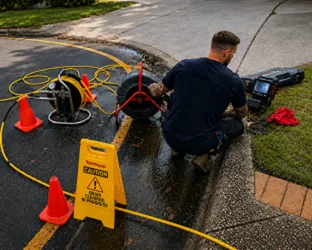
Pressure-testing the pipework in sections, hot against cold, line by line, corners the leak into one run before any listening starts.

Acoustic gear and thermal imaging along the guilty run until the readings converge. The mark on the floor is where the repair happens, centimetres, not metres.

Access exactly at the mark, the failed section repaired, pressure-tested, closed up. If the line's condition says reroute instead of repair, you get both numbers first.
That is a leak, and it is not fixing itself. Book the detection before it surfaces through something expensive.
Instruments, evidence, one precise repair: and a bill that goes back to normal.

Leave your details and our local Mosman team will call you back fast.